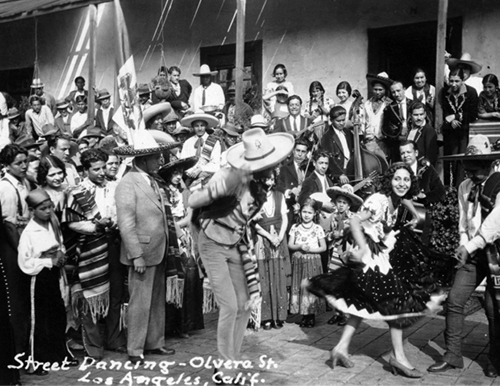
Christine Sterling, born Chastina Rix on November 5, 1881, was known as a preservationist who helped create Olvera Street and preserve the Avila Adobe house. She also helped create China City, a short-lived community that was opened on June 7, 1938, but was mysteriously destroyed by fire on September 2, 1948. She was born and raised in Oakland, California, but moved to Los Angeles in the early 1920s. She had a romanticized version of Los Angeles, having read about the city in booklets and folders that “were painted in colors of Spanish-Mexican romance. They were appealing with old missions, palm trees, sunshine, and the ‘click of castanets.'” In 1926, she visited Wine Alley, which later became known as Olvera Street. Though the adjacent plaza was the historic heart of the city, the “birthplace of Los Angeles,” the area was neglected and falling into disrepair. She began a 2-year campaign to save the Ávila Adobe house and create Olvera Street. After experiencing a lot of setbacks, she gained help from Harry Chandler, the publisher of the Los Angeles Times, and together they convinced the city council to pass an ordinance to close Olvera Street to cars and to “reconstruct it as a place of historic interest” in September 1929.
Known as the “Mother of Olvera Street,” Christine was the managing director of Olvera street and personally approved each tenant. She believed that, “It might be well to take our Mexican population seriously and allow them to put a little of the romance and picturesque into our city which we so freely advertise ourselves as possessing. The plaza should be converted into a social and commercial Latin American Center.” She provided real economic assistance and opportunity to the Mexican families who ran the puestos and the taquerías, at a time when Los Angeles was refusing to assist Mexican workers at all. Many of these businesses are still run by members of the same families today, and see Sterling as someone who gave them the chance to live the American dream when no one else would.
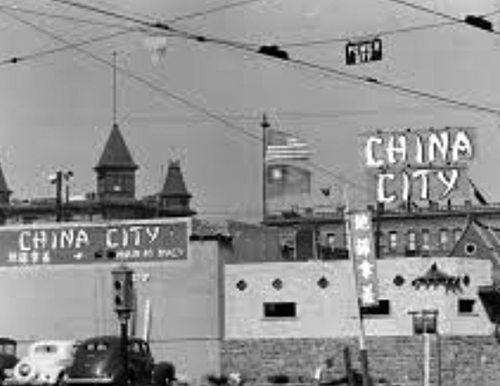
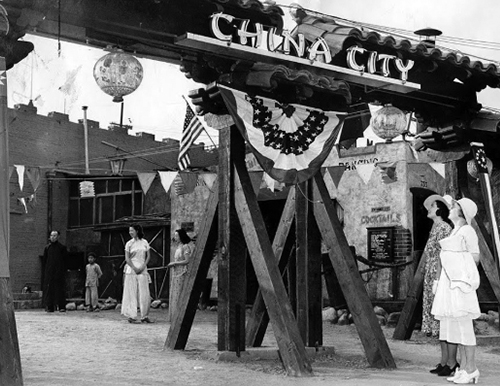
She did the same for the Chinese American community when she helped establish China City. The project was her attempt to fill a gap left when most of Old Chinatown was destroyed to make way for the new Union Station. She envisioned a Chinese-themed tourist attraction, modeled after a Hollywood movie set, that would attract visitors to the Old Plaza area while at the same time providing jobs for the Chinese American community. Though short-lived, China City played a pivotal role in the lives of many Chinese Americans who lived in the city in the 1930s and 1940s. “Los Angeles is under obligation by hundreds of Chinese, many of them early-day residents here, who have been uprooted from where they have made their home for years. The new China City will give these Chinese new opportunities to preserve their racial and cultural integrity by bringing them together in one district,” Sterling said. Indeed, her project helped provide a sense of community to many of the families that worked there. The families created bonds that existed across generations. China City provided the opportunity for those who worked within its borders to succeed financially, to provide for their families, and to form bonds despite their differences.