

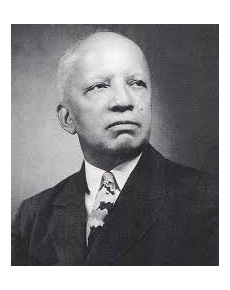
Carter G. Woodson is known as the “Father of Black History.” He was born on December 19, 1875, in New Canton, Virginia, to formerly enslaved parents. As the fourth of seven children, he worked as a sharecropper and a miner to support his family. After attending Berea College in Kentucky, he worked as a superintendent for the U.S. government in the Philippines.
In 1912, he earned a PhD from Harvard, becoming the first child of enslaved parents to earn a doctorate in history. On September 9, 1915, he founded the Association for the Study of Negro Life and History (ASALH), the oldest organization dedicated to studying and promoting black history, and the organization responsible for selecting the theme for Black History Month.
In 1926, he founded Negro History Week in February to honor Frederick Douglass and Abraham Lincoln, two key figures in the fight for freedom and equality, a tradition that later evolved into Black History Month. Year after year, he built Negro History Week into an African American and American cultural institution. He set the themes and provided materials to illustrate the contributions people of African descent had made to the movement of history and modern culture. For the rest of his life, he continued teaching and supporting civil rights efforts.
In 1986, Congress passed Public Law 99-244, designating February as Black History Month. Since the passing of the founder, ASALH has continued his work, making Negro History Week and Black History Month an even more deeply rooted American institution.
